
Pint of Science - CryoStore diary Mafalda Almeida
18-20 May 2026 | Rennes, France
For those who don’t know, Pint of Science is an international science communication festival where researchers share their work in a relaxed and accessible way, usually in casual places such as bars, cafés, or pubs, and ideally accompanied by a nice cold drink. Science, but make it social.
The event started in the UK in 2012 with Dr. Praveen Paul and Dr. Michael Motskin, two research scientists at Imperial College London. They first organized an event called “Meet the Researchers,” where people affected by Parkinson’s, Alzheimer’s, motor neurone disease, and multiple sclerosis were invited into their labs to see the kind of research being done. The experience was inspiring for both the visitors and the researchers. From there came the idea: if people were interested in coming into labs to meet scientists, why not bring the scientists out to the people? And so, Pint of Science was born. The first festival took place in May 2013 in three UK cities, and the concept quickly spread around the world. In France, the event was launched by Élodie Chabrol, who got involved with Pint of Science while doing a postdoc in the UK. She later founded the French branch and is now the International and France Director of the festival, helping new countries launch the event and making science more accessible everywhere. In 2026, Pint of Science took place in more than 600 cities worldwide, with researchers sharing their work in local pubs, bars, cafés, and public spaces.
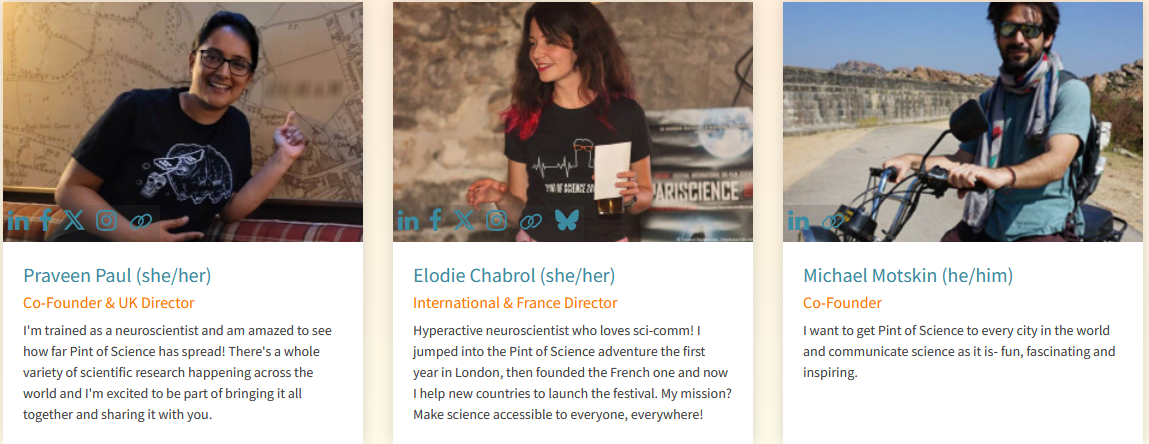
The founders of Pint of Science, Dr. Praveen Paul and Dr. Michael Motskin, with Élodie Chabrol, founder of Pint of Science France.
So, what is the event itself? As I already said, it is basically science in a bar. But what else? Each Pint of Science event is organized around broad themes, such as Planet Earth, Our Body, Atoms to Galaxies, Beautiful Mind, Our Society, and Tech Me Out. These themes are intentionally general, which means they can include many different subjects. For example, “Beautiful Mind” can include talks about the brain, psychology, physical activity, mental health, cognitive biases, or even how we think about alternative therapies and scientific evidence. The idea is flexible, and each city can adapt the themes depending on the researchers, speakers, and topics available.
In Rennes, the event was organized by three amazing coordinators: Marion, Guillaume, and Maxime. Around November 2025, they sent an email to the university asking if people were interested in joining as volunteers. I saw the email and immediately said yes. Actually, I did not just say yes. I sent a very enthusiastic email in French, basically saying: “I can do this, I can do that, I am available to learn this, I can help whenever needed.” Looking back, I probably could have just written a normal “Yes, I would like to participate,” but as with every aspect of my life, I am a bit of an “all or nothing” person. I am not really built for mysterious and chill. I am more of a “heart on my sleeve and pouring everything out there” type of person. A big part of why I wanted to join was because I had recently become interested in science communication, scientific writing, and project management as possible career paths outside of pure academic research. I wanted to gain more experience and understand how these kinds of events are organized from the inside. It was also a good distraction from writing my papers and thesis (procrastination 101: do something productive so you still feel like you are working, while carefully avoiding the task you should probably be prioritizing).
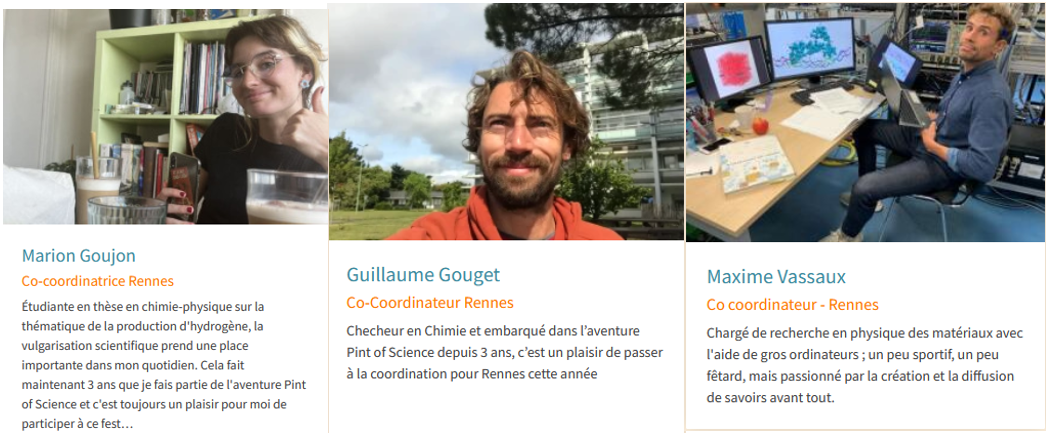
Our amazing Rennes coordinators: Marion, Guillaume, and Maxime, who made the whole event possible.
Anyway, after that, we had a meeting where the coordinators explained how the event worked and what we would be doing. We were asked to rank the themes according to our preferences in a sheet of paper, from the one we were most interested in to the one we were least interested in. Of course, I put Planet Earth first, and that is exactly what I got (for reference, in Rennes there were seven different teams). My team had four people, including me: Francesca, an Italian postdoc, Gaétan, a second-year PhD student, Enora, a first-year PhD student, and me. We all came from different scientific backgrounds, which made the group really interesting. Gaétan works in applied mathematics and oceanography, Enora has a background in pharmacy, health biology, and natural product chemistry, and Francesca works in astrochemistry, using computational methods to study molecular processes relevant to space and planetary atmospheres. I come from marine biology and now work on cryopreservation and epigenetics. So, basically, we had a nice little mix of ocean, microbes, space, and fish, which also meant we could bring very different ideas to the table when choosing the topics for our nights.
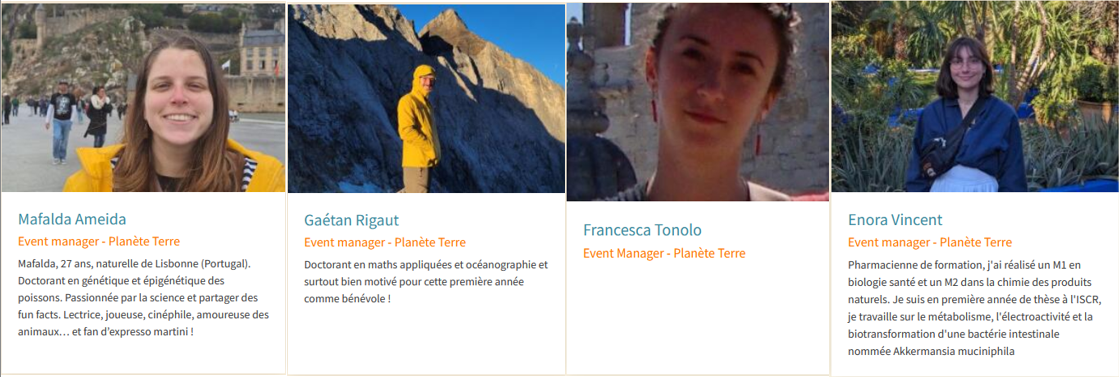
Our Planet Earth team, aka the Fab Four: Francesca, Gaétan, Enora, and me.
After creating our amazing Fab Four (any Beatles fans out there?), we started working. The first thing we needed was a bar. Enora very kindly took care of this super quickly, and we chose her favorite bar in Rennes: La Maison. I admit I was a bit skeptical at first because of the size, but she was completely right. The atmosphere was great, and it ended up being a perfect fit for the event. After that, we had to decide the topics for each night. The idea of Pint of Science is that each evening has a different theme, so different audiences can come depending on their interests. Someone might be very excited about the ocean but less interested in pesticides, or the other way around. I gave a bunch of different suggestions, and after voting (we are very democratic in this group!) we chose our three topics: 1) Agriculture and pesticides, 2) Microorganisms, 3) Marine environments. The last two were definitely influenced by me and Enora. Marine environments because of my marine biology background, and microorganisms because of Enora’s PhD topic. The agriculture and pesticides night was also very relevant, especially with ongoing debates and new discussions in France around pesticides and environmental policies.
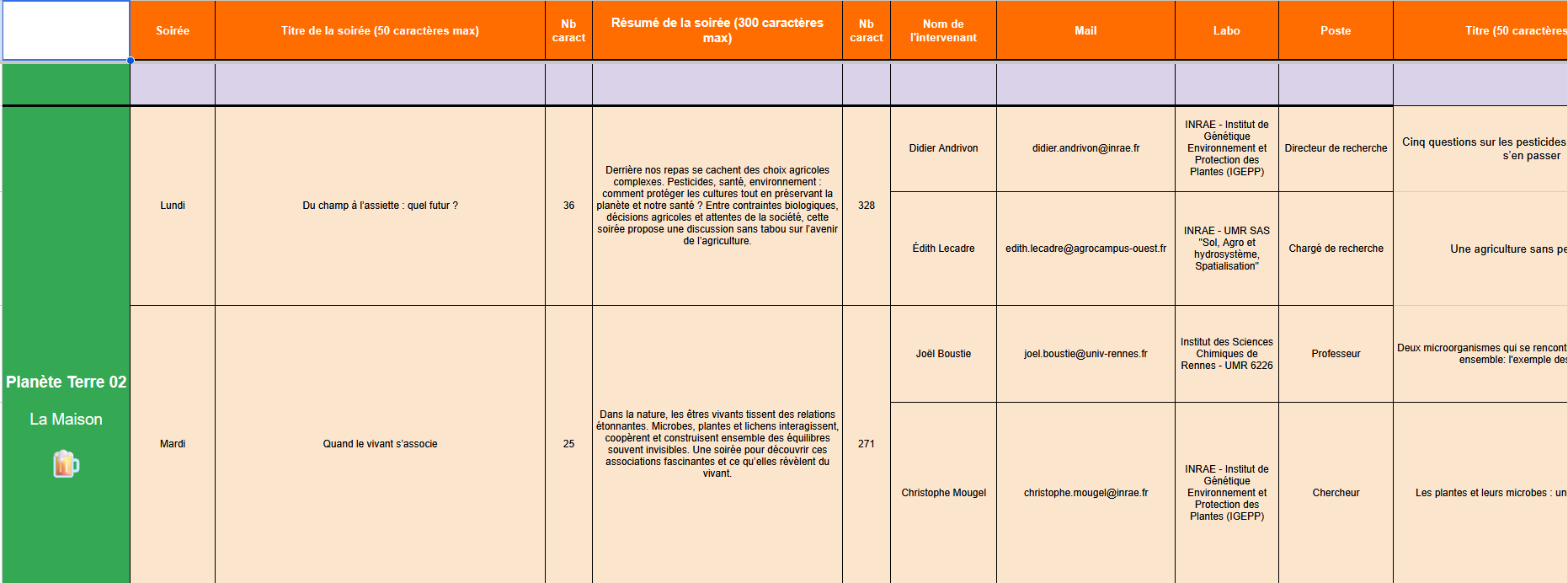
Behind the scenes: the Excel sheet where we organized the themes, speakers, titles, summaries, and all the little details for our three nights.
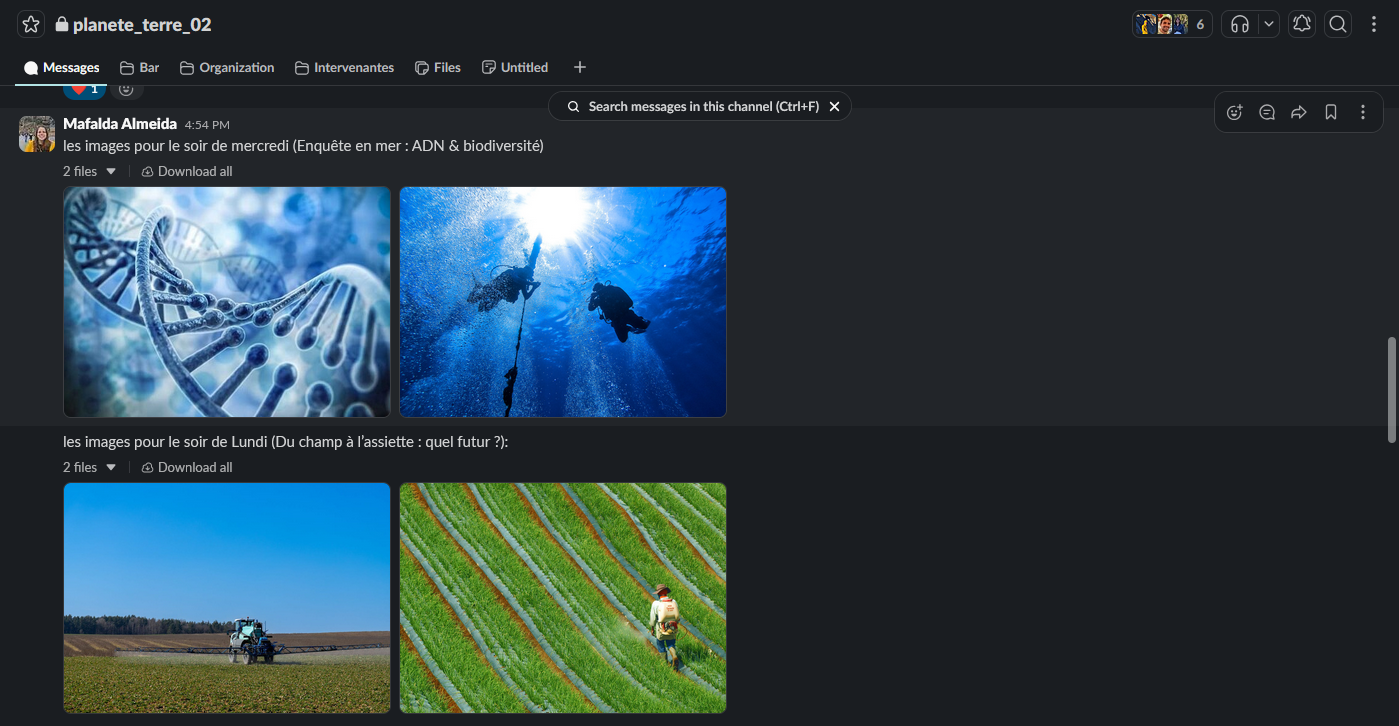
Behind the scenes part two: our Slack channel, where ideas, reminders, images, and some mild nagging on my part all came together.
Then came the next big mission: finding speakers. For each night, we needed two speakers connected to the topic. The process sounds easy: you search for researchers, find people who seem interesting, send emails, explain the concept, and ask if they would like to participate. In reality, it is not that easy. A lot of people do not reply to emails, or they say no, or they are already busy. We found the speakers for the marine environment night quite quickly, but the other nights were more challenging. We had one speaker for agriculture and one for microorganisms, but the rest was complicated. The deadline was getting closer, we kept emailing people, and for a while it felt like no one was replying or available. Eventually, we found our last two speakers, but it was a very close call. I think that was probably the most stressful part of the whole organization. Once that was done, we could finally move forward. We informed the speakers about the format of the evening, the schedule, who would speak first, how long the talks should be, and how the event would run. I also wrote the title and summary for each night, in French, which I was quite proud of! The speakers also sent us the titles and summaries of their own talks. And voilà, the program went live!
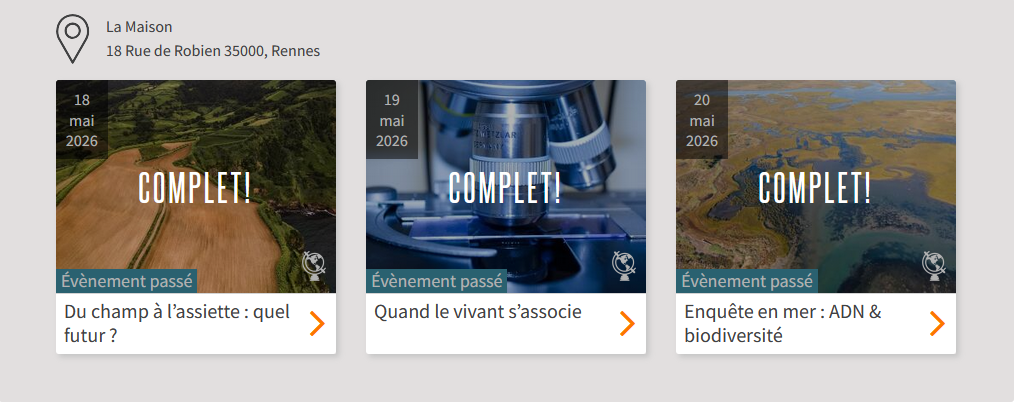
The program went live: three Planet Earth nights, three topics, and a sold-out venue!
After that, we moved on to the practical details. We went to the bar to organize the room: where the tables and chairs would go, where to place the screen and projector, how many seats we could fit, and how to make the space comfortable for everyone. We needed around 30 seats because all three nights were sold out! There was also the dramatic quest of finding a screen and a projector, because apparently no event is complete without at least one logistical drama. We also organized a small game between the two talks: bingo. The idea was to create a short break during the evening so it would not be only science talks from beginning to end. The bingo also allowed us to give small prizes to the audience. Some gifts were provided by the national organization (t shirts, cinema pass, etc), and we also had a small budget to buy a few extra ones. We chose three different board games, one for each night, and tried to connect them a little bit to the theme of the evening.
Everything was ready. Then came the big nights. We arrived around 18h to set up the room. We arranged the chairs and tables, prepared the projector, checked the slides, organized the gifts, and waited for people to arrive. At 19h, the first talk began. People seemed genuinely interested. They asked a lot of questions, both during the talks and afterwards. Then came our little bingo moment. I was the one running the bingo, which was slightly terrifying because speaking French in public still makes me nervous, especially in front of a large group of people. And the worst part? Yelling numbers. Numbers in French are my enemy. Why are we doing math just to say 97? Why is this necessary? Anyway, despite my personal battle with French numbers, it went well. People really got into the game and were surprisingly competitive for the little prizes. The second talk usually started around 20h, and even though it was later in the evening, people stayed engaged and excited. La Maison also served food, so people could eat and drink while listening to the talks, which created a really nice atmosphere. Enora was completely right: choosing La Maison was a great decision. I had been worried the space would be too small, but it worked really well. Everyone seemed comfortable, and the room felt cozy rather than crowded. One of the things I enjoyed the most was seeing the kind of questions people asked. Because many people were not specialists in the topic, they asked questions from a completely different perspective. Sometimes those are the most interesting questions. The researchers also seemed to really enjoy it and were happy to answer all kinds of questions. Overall, I really loved the experience.
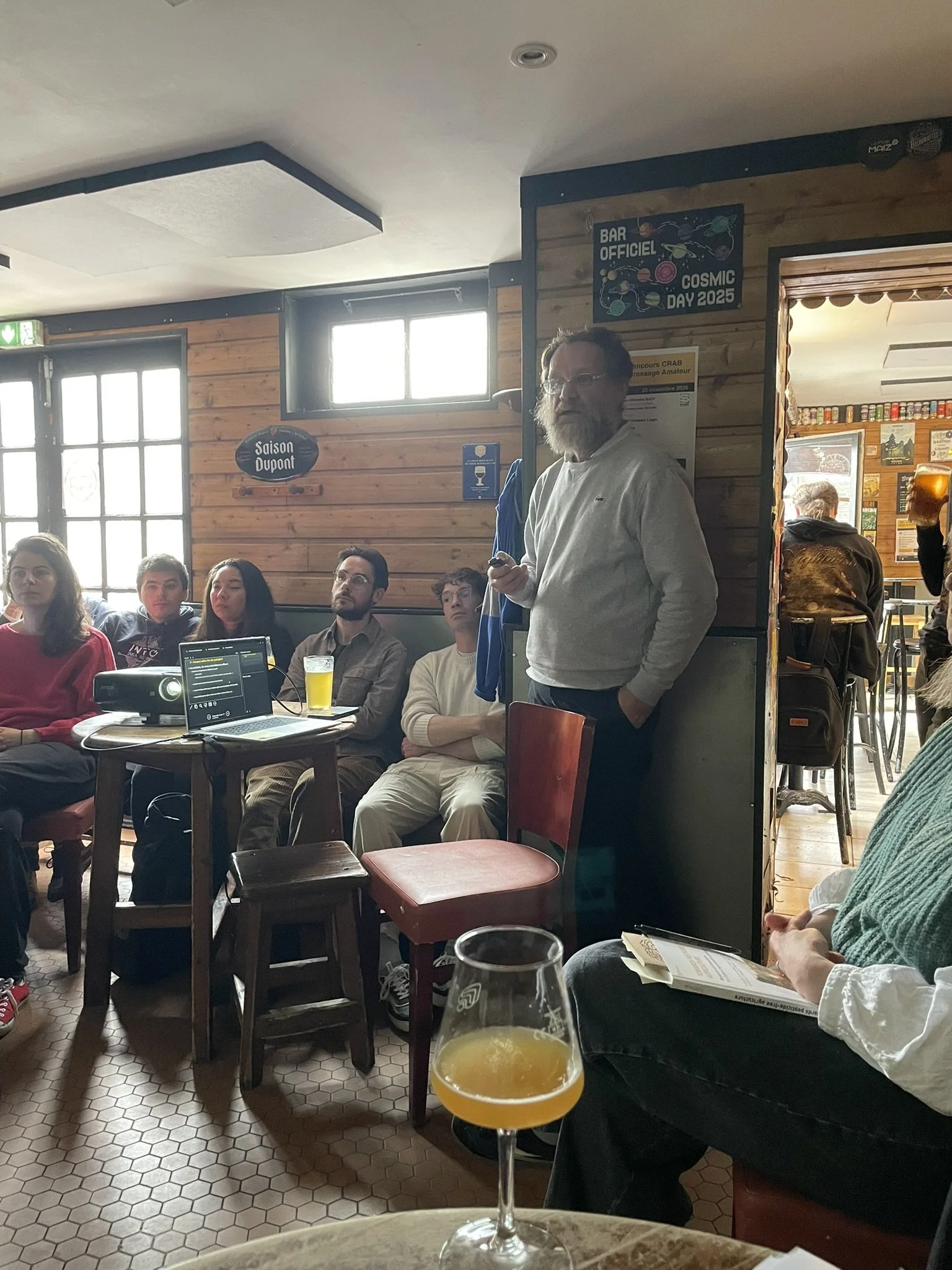
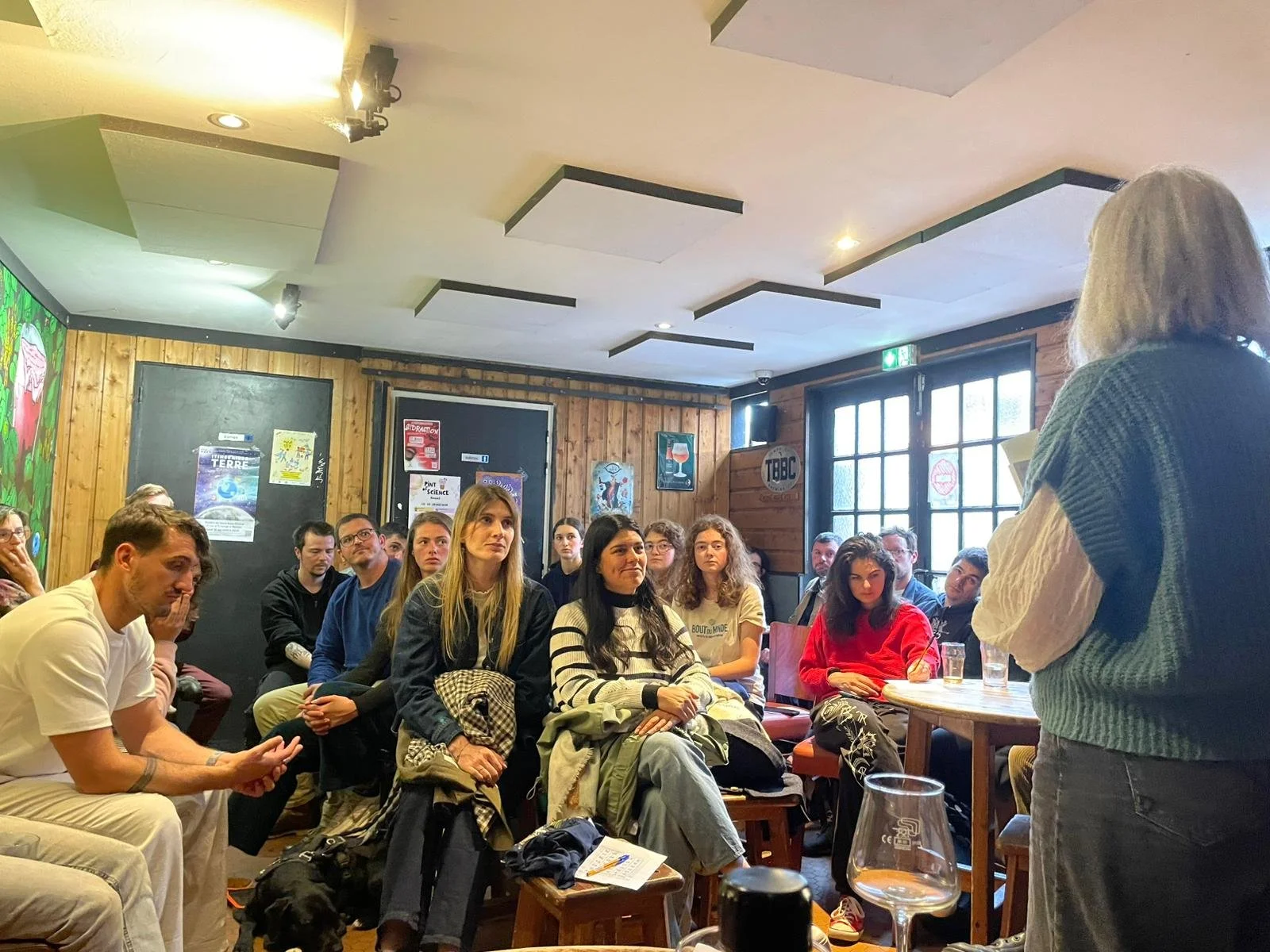
Night one: Didier Andrivon and Édith Lecadre discussing agriculture, pesticides, and the future of farming.
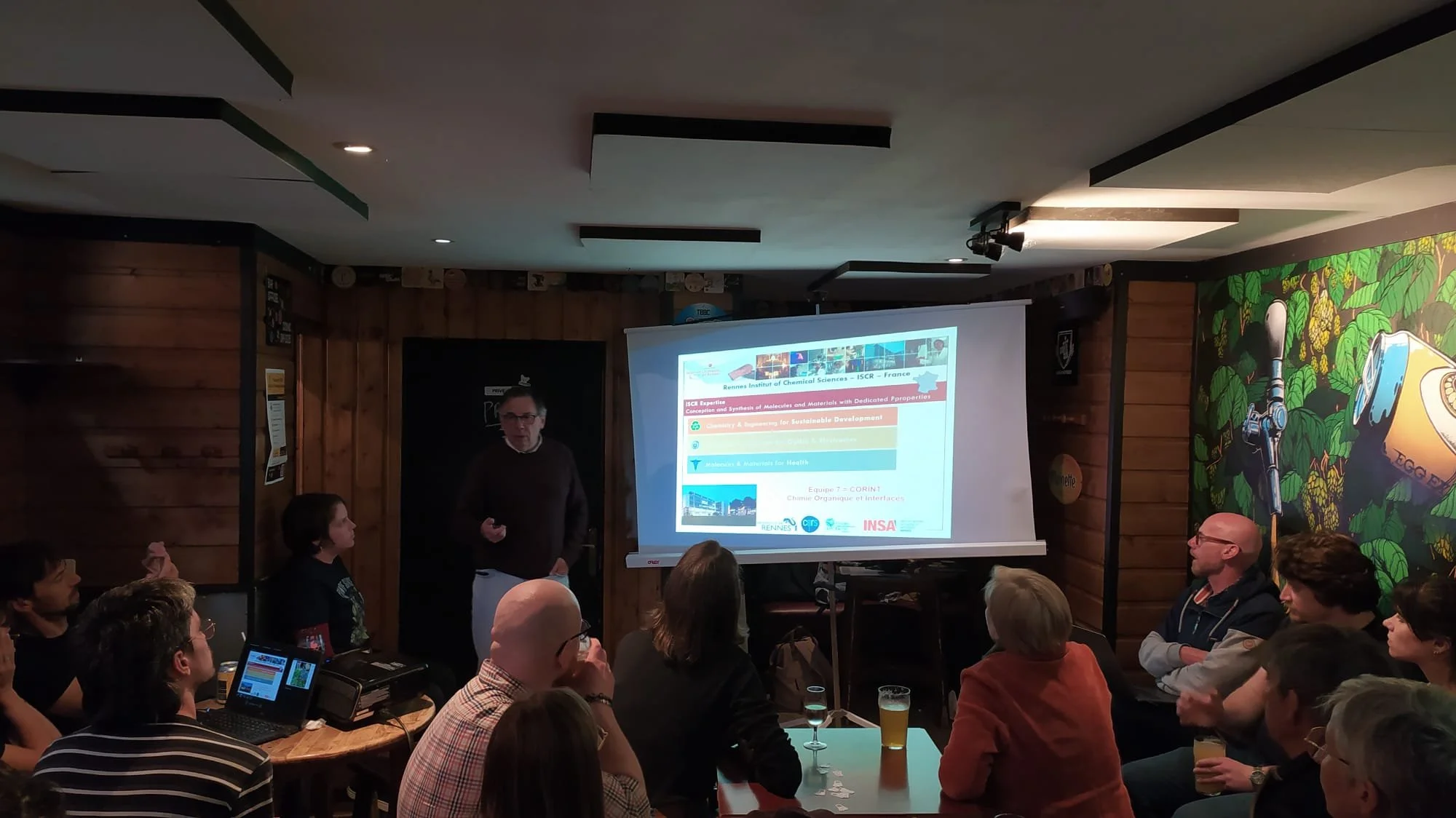
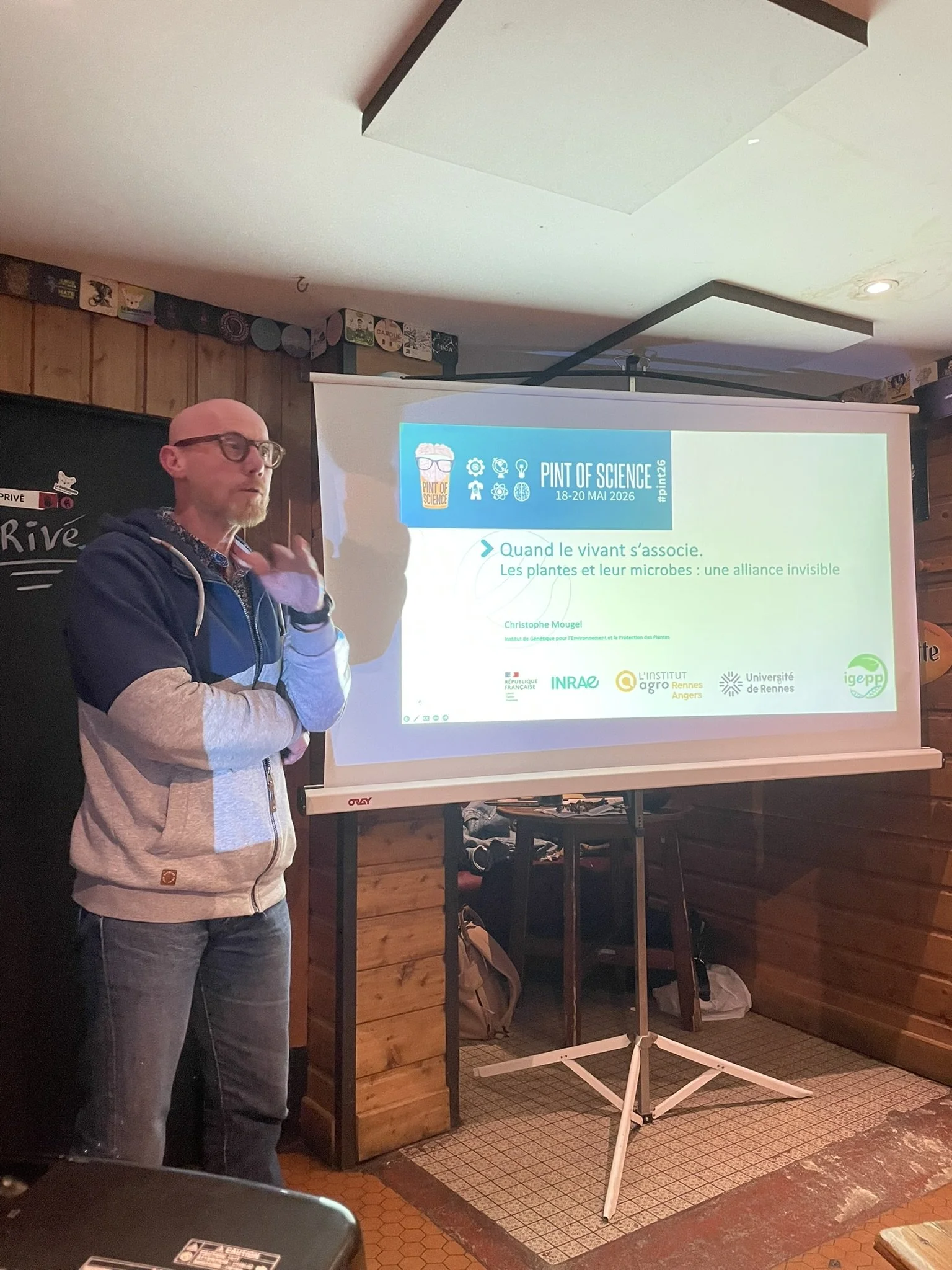
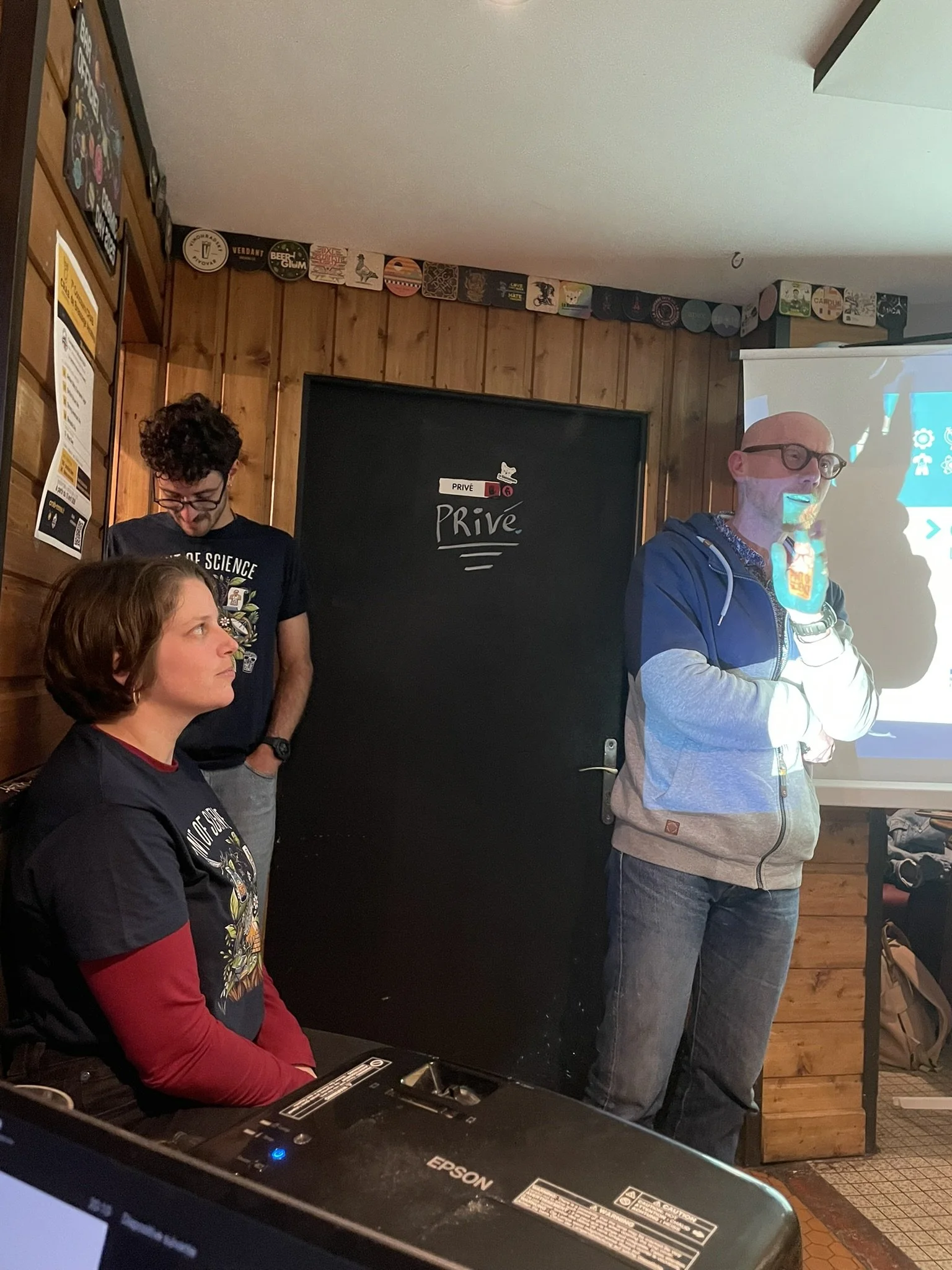
Night two: Joël Boustie and Christophe Mougel on the hidden associations between microbes, plants, and lichens. Featuring me, very focused, watching Christophe present.
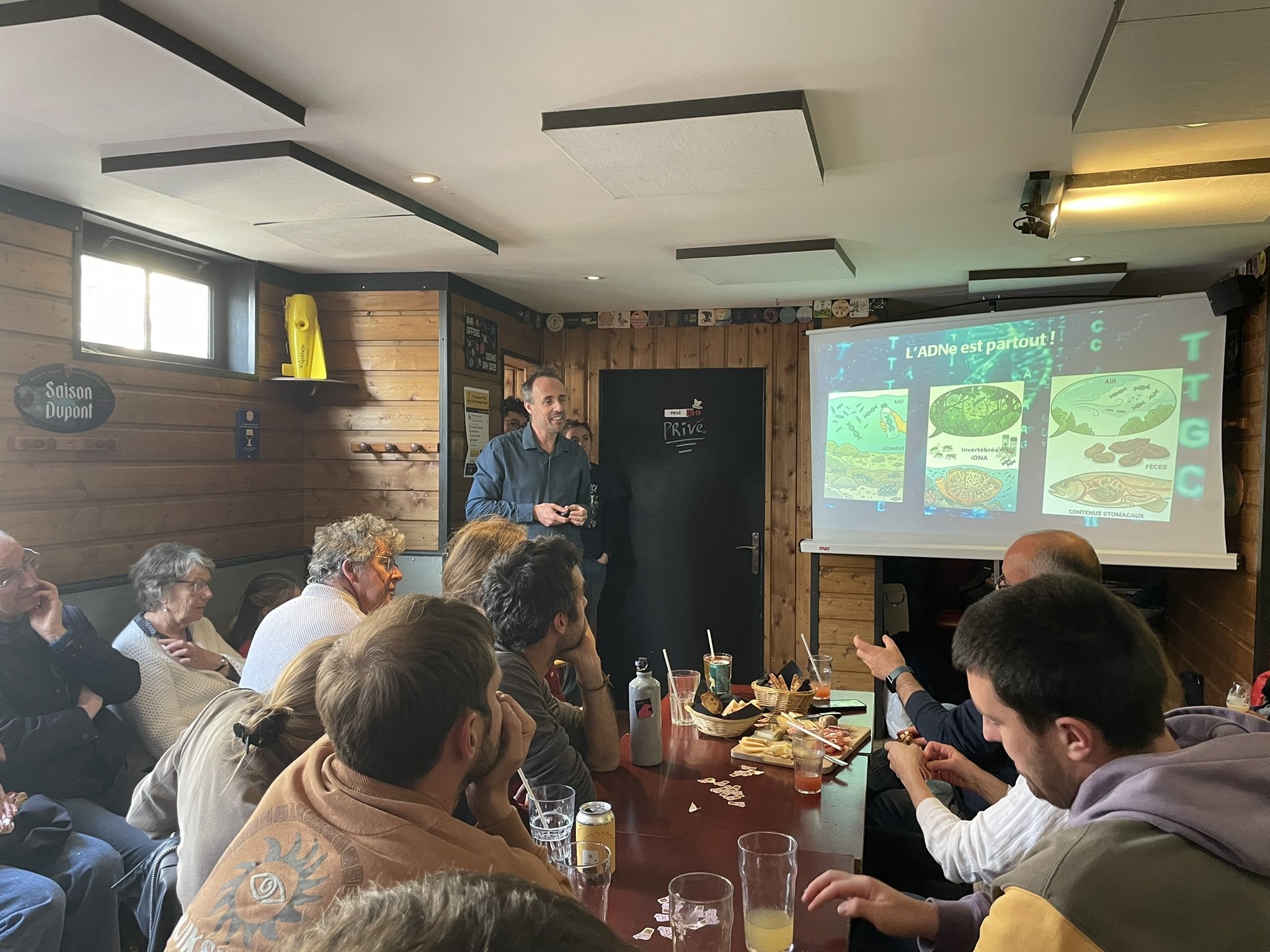
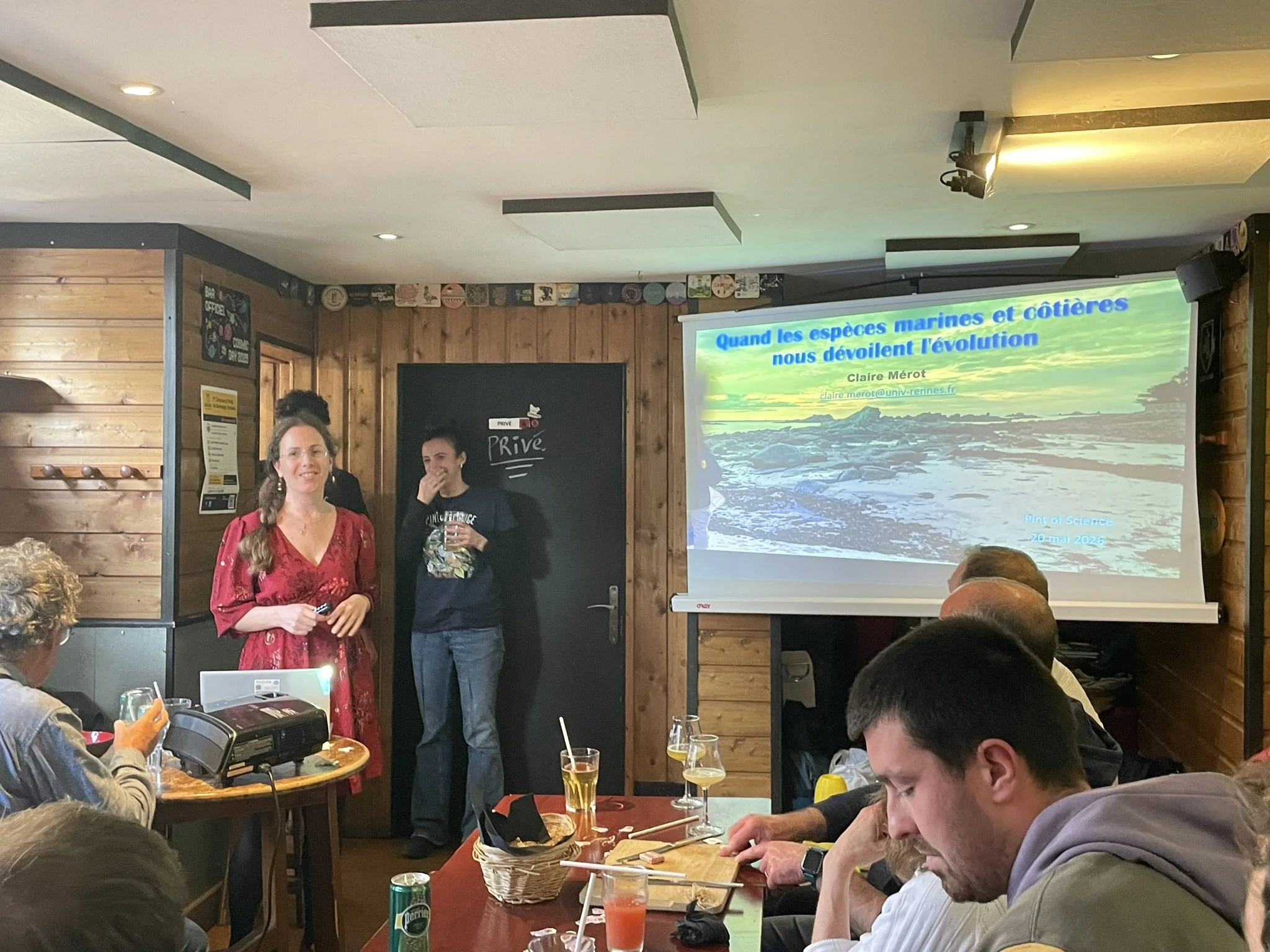
Night three: my personal favorite (shh, don’t tell!), Erwan Quéméré and Claire Mérot took us on a molecular investigation through marine ecosystems, from environmental DNA to genomics, evolution, and adaptation.
I learned that I enjoy this type of work: organizing, coordinating people, making lists, writing scientific content in a way that is easier for the public to understand, keeping track of deadlines, and making sure everything is ready on time. Basically, all the things that make my little control freak brain happy. The other members of the group joked that I talked a lot in the group chat, constantly asking questions and saying things like, “We need to do this, the deadline is X.” One time, over beers, I told them I was thinking about maybe going into project management or science communication after my PhD. They laughed and said, “That is so you.” Apparently, Maxime, one of the coordinators, even told them we were the group with the most Slack messages. I am pretty sure a good portion of those came from me. Ups. But honestly, I am glad I was able to participate. I really enjoyed being part of it. I sometimes feel a bit ashamed that I cannot participate in more events like this in France, mostly because my French is not fluent enough for me to always feel confident, but also because I am genuinely shy. Most people in the lab say my French is good and that it is mostly insecurity. Maybe they are right (maybe they are just being nice. Who knows?). Either way, I was really happy I pushed myself to participate, even if the language barrier made me nervous at times. I am glad I was brave enough to do it.
I had a great time, gained experience, and confirmed that I really enjoy this kind of activity. Whether it is with children or adults, in a bar, a classroom, or somewhere completely different, I think science should leave the four walls of the lab and conferences more often. Science is part of society, and most research is funded by taxes, so it should be shared with the community too. The more we share science, the less intimidating it becomes. The more people understand, the more informed they can be when making decisions, thinking about policies, or simply trying to understand the world around them. Science is for everyone.
Happy Pint of Science Month! See you next year, perhaps in another country this time ;)
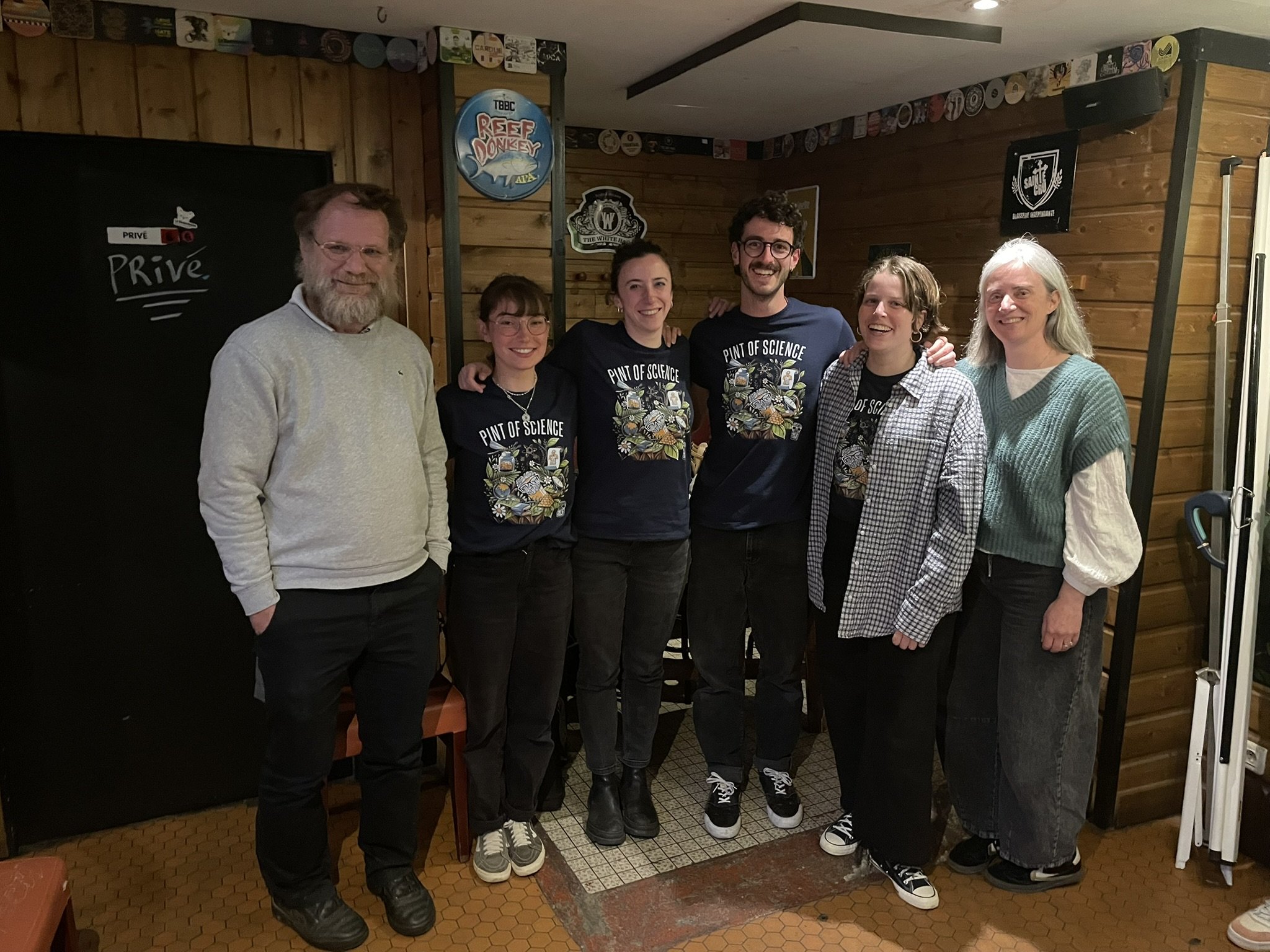
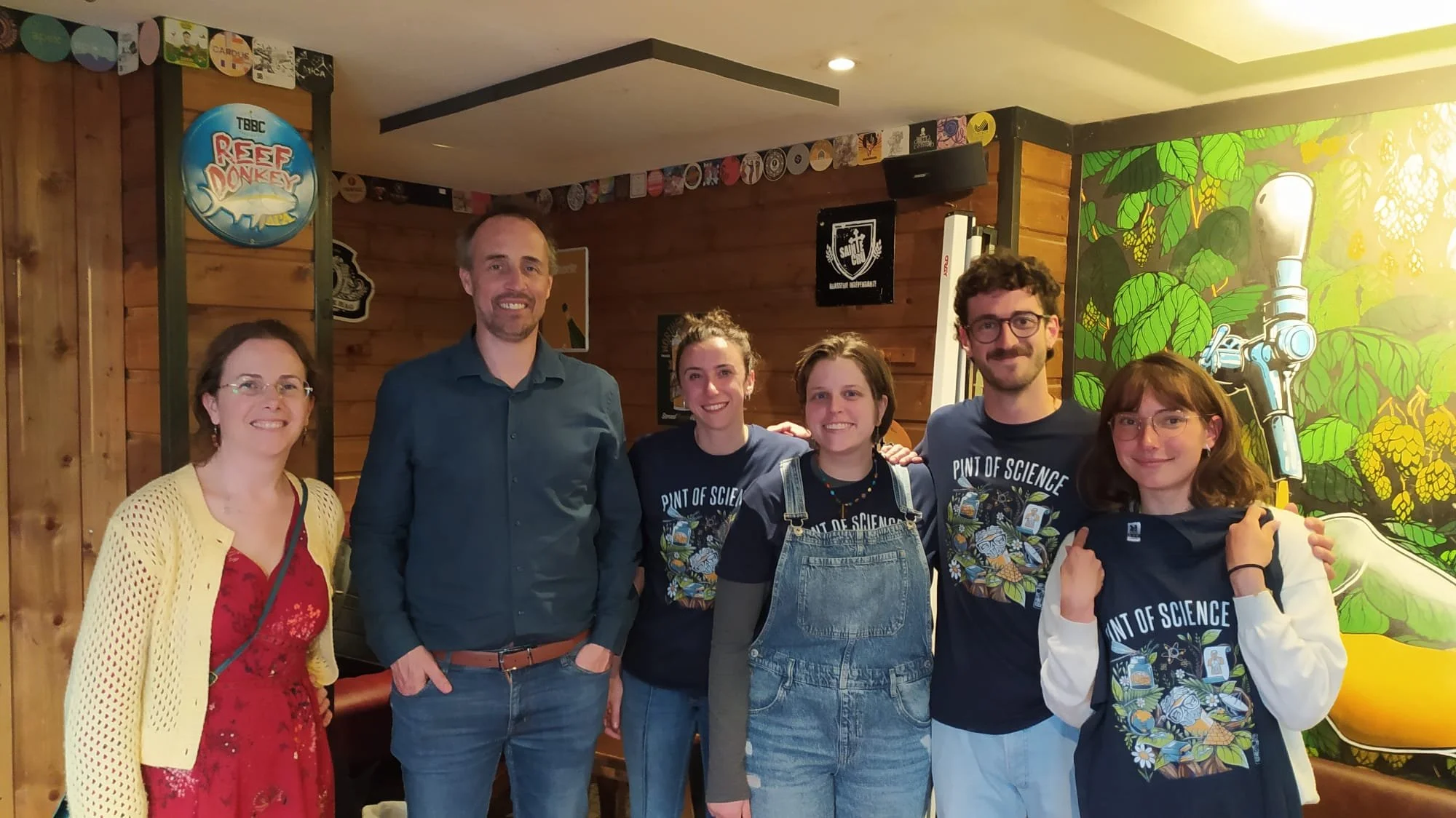
My amazing Planet Earth team with the speakers from nights one and three. We had a lot of fun, and I definitely could not have done it without them! (Night two photo not included because Francesca was busy presenting in another bar. Yes, she was both organizer and speaker!).