
CryoStore Final conference
16–17 February 2027
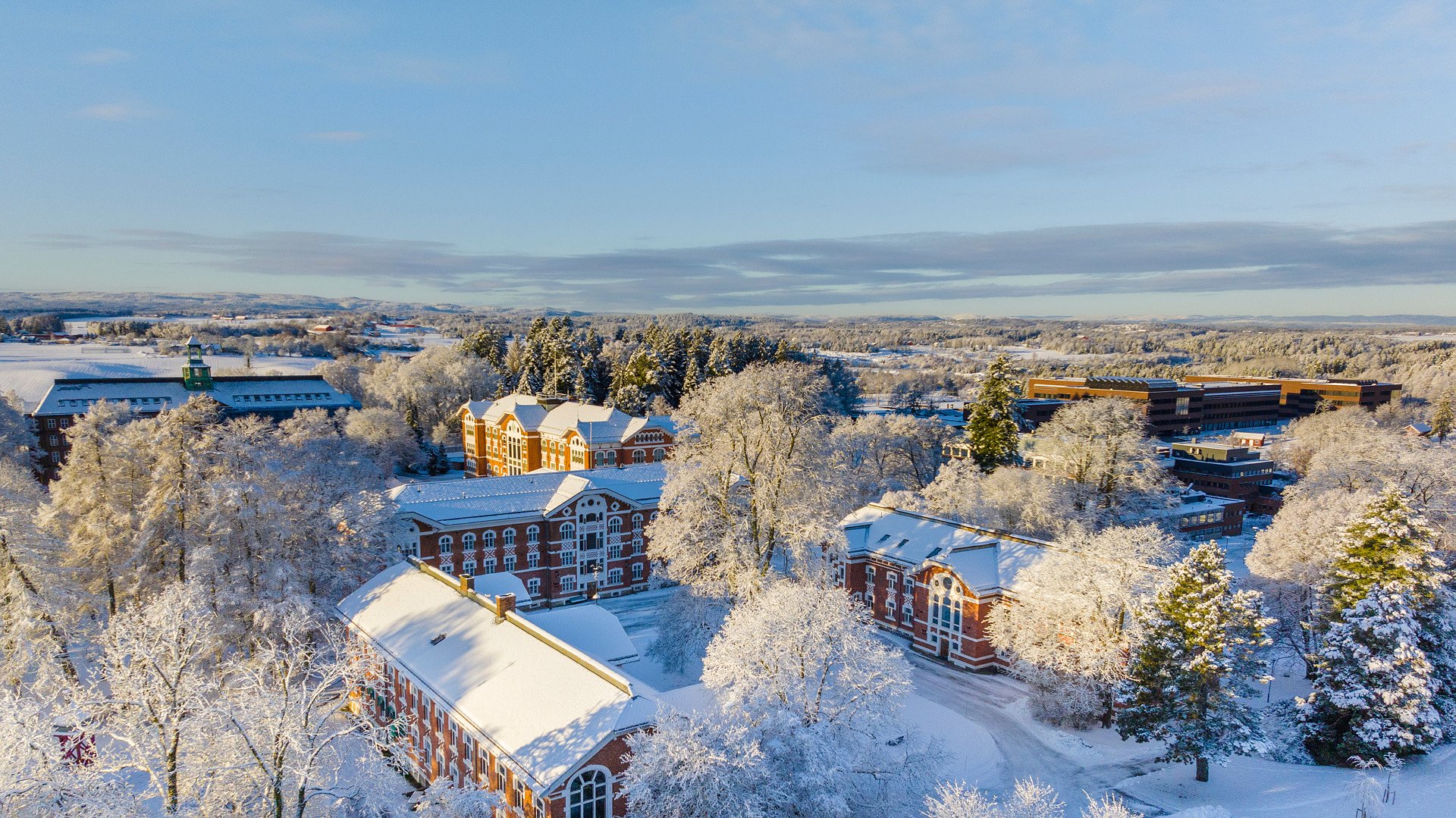
Norwegian University of Life Sciences
Ås, Norway
Join us for the final conference of the CryoStore Doctoral Network, bringing together researchers, industry, and stakeholders to showcase the latest advances in cryopreservation and animal genetic resource conservation.


Program
16 February
CryoStore Doctoral Research Symposium
Presentations by the 10 CryoStore PhD researchers, highlighting their research projects and key findings.
Sheyda Shapouri (NMBU)
Paulina Pyrek (NMBU)
Oleksandra Hubenia (LUH)
Abdul-Rashid Iddi (LUH)
Mafalda Almeida (INRAE)
João Gil Gomes Ferreira (USB)
Mahsa Abdi (WUR)
Firouzeh Sadeghzadeh (SYSAAF)
Linde Rombaut (INIAV)
Batuhan Kaplan (INRAE)
17 February
Invited Speaker Sessions
Sipke Joost Hiemstra (Head of the Centre for Genetic Resources, the Netherlands (CGN), Wageningen University & Research)
Cryopreserved Germplasm and Animal Conservation: Recent developments, biobanks, bottlenecks and future priorities
Elsa Cabrita (PhD, Associate Professor, University of Algarve)
Fish Germ Cell Cryopreservation, Cryobanking and Cryodamage
Karolien Desmet (DVM, PhD, Embryo Production Manager, GENO)
The Importance of CryoStore from the Industry’s Perspective
Registration
Fill in this form to register for the event: Microsoft Forms
The registration is binding!
If you have any questions or concerns, please contact Silje Modahl Johanson at silje.modahl.johanson@nmbu.no
Registration deadline: TBA
Event fee: Free for participants
Registered participants will get a free lunch on February 16th.
Unless otherwise agreed, please arrange your own travel and accommodation.
Practical information
When
16 February:
09:00 - 16:30
17 February:
09:00 - 13:00
14:30 Semiannual meeting of the CryoStore Supervisory Board and General Assembly
Where
Norwegian University of Life Sciences (NMBU), Faculty of Veterinary Medicine
Elizabeth Stephansens vei 15
1433 Ås, Norway
Room: TBA
How to get there by public transport
We recommend that you use entur.no to plan your journey within Norway.
From Oslo - Option 1:
From Oslo Central Station (Oslo S), take the R21 Train to Ås station (direction Moss). The train normally takes just 17 minutes.
From Ås station, you can either walk 2,1 km to the Faculty of Veterinary Medicine or take the 510 bus from Ås high school (Ås videregående skole) to Universitetet i Ås (750 m to the location) or Vollebekk (400 m to the location). From there, it is a short walk to the Faculty of Veterinary Medicine.
From Oslo - Option 2:
From Oslo Central Station (Oslo S), take any train to Ski station. The train normally takes just 11 minutes.
From Ski, take the 510 bus from Ski stasjon Jernbaneveien (direction Drøbak - Frogn vgs. or Universitet i Ås) to Universitetet i Ås (750 m to the location) or Vollebekk (400 m to the location). Walk the rest of the way to the Faculty of Veterinary Medicine.
From Ski:
Take the 510 bus from Ski stasjon Jernbaneveien (direction Drøbak - Frogn vgs. or Universitet i Ås) to Universitetet i Ås (750 m to the location) or Vollebekk (400 m to the location). Walk the rest of the way to the Faculty of Veterinary Medicine.
How to get there by car
Use google maps to find the easiest route to Norwegian University of Life Sciences (NMBU), Faculty of Veterinary Medicine.
Parking at NMBU
Guest parking spaces can be found on the large parking lot outside the Faculty of Veterinary Medicine. Please see the map in Mazemap.
Parking applies on weekdays from 8 am – 17 am. Parking is free of charge on weekends and holidays.
The parking fee can be paid using parking meters or the app Apcoa Flow. Ticketless parking (registers the registration number of the car).
Code 6658 – guest parking without charging: NOK 10 per hour + NOK 2 entry fee.
Code 6659 – Guest parking with charging: NOK 28,50,- per hour + NOK 2 entry fee.
You can find the app in Apple store and Google Play. For Windows phones visit www.apcoa.no as they are not supported in the app.
The maximum parking time is 24 hours.
More information here: www.nmbu.no/en/research/parking

This project has received funding from the European Union’s Horizon Europe program, Marie Skłodowska-Curie Actions, under Grant Agreement No 101120454